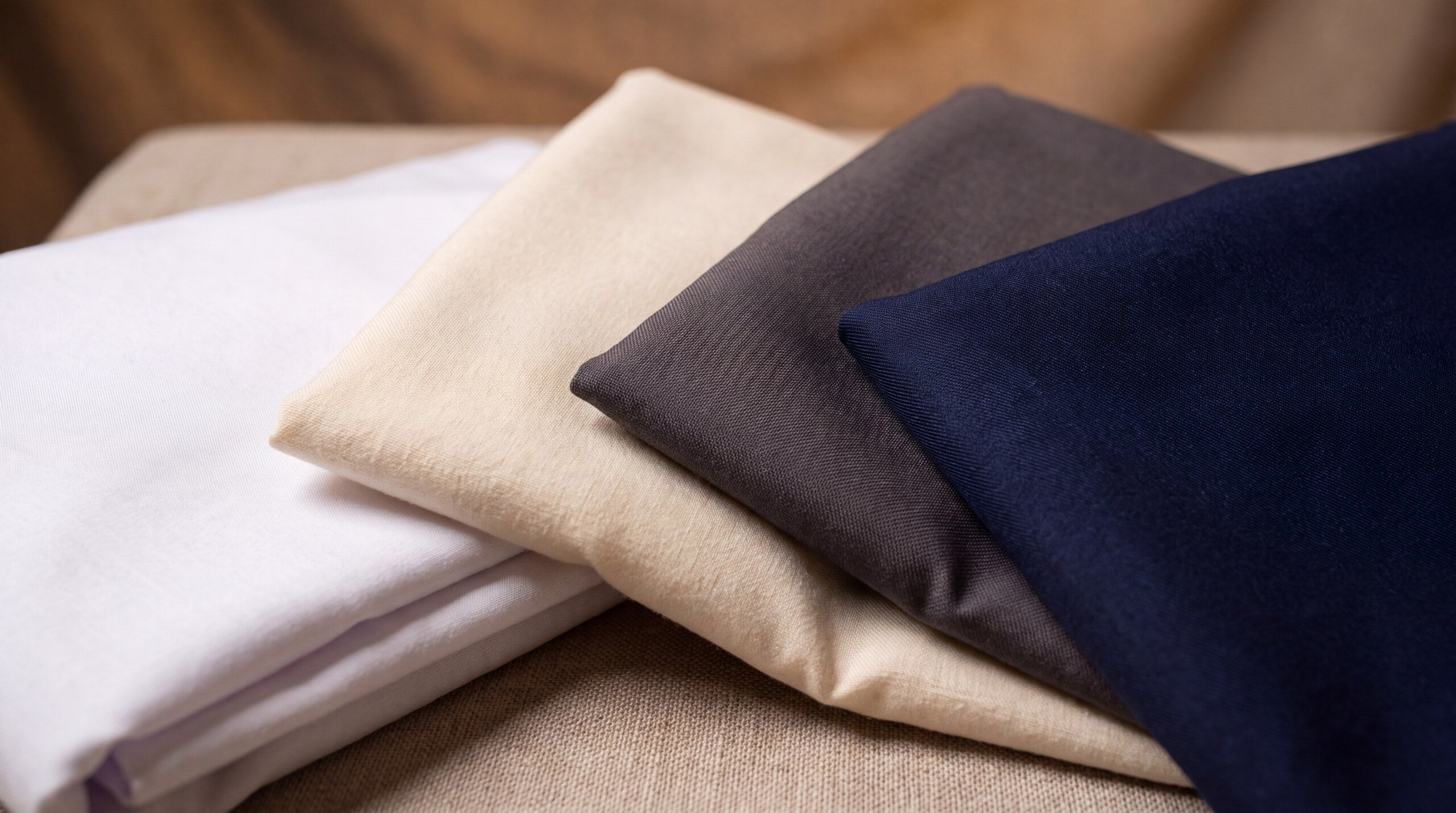
Thobe Fabrics Explained: Cotton, Blends & What to Wear Each Season
Two thobes can look identical online and feel completely different in real life. The difference is fabric. Here's a plain-English guide to what thobes are actually made of, how to judge quality before you click "buy," and which fabric belongs in your closet each season.
100% Cotton: The Breathable Classic
Cotton breathes, absorbs sweat, and feels soft against the skin — ideal for hot summers and long wear at the masjid. The trade-offs: it wrinkles easily and can shrink if washed hot. If you love the crisp, natural feel and don't mind ironing, cotton is king in warm weather.
Cotton-Poly Blends: The Everyday Workhorse
Most quality everyday thobes today use a cotton-polyester blend, and for good reason. The polyester adds wrinkle resistance, shape retention, and durability, while cotton keeps it breathable. A blend thobe comes out of the wash looking nearly ready to wear — perfect for students, professionals, and anyone who prays five times a day in the same garment. Our everyday and premium thobes are built on this principle: premium feel, minimal maintenance.
Shop This Look


Premium Kandura Fabrics: The Smooth Operators
Emirati-style kanduras typically use finely woven, high-thread-count fabrics with a subtle sheen and beautiful drape. They photograph wonderfully and hold their silhouette all day — which is why this style is the go-to for Jumu'ah, Eid, and weddings when you want something that looks noticeably sharper than your daily-wear rotation.
Brushed & Heavyweight Fabrics: Winter Warriors
For American winters, look for heavier weaves and brushed-interior fabrics that trap warmth. Winter thobes and hooded styles use thicker material so you can stay modest without freezing between the car and the masjid door. Layer a Turkish coat over the top and you're set for a Chicago January.
Lightweight Weaves for Peak Summer
In July heat, short-sleeve gandora-style thobes in airy weaves are unbeatable — looser fit, more airflow, and a relaxed look for BBQs and beach days.
How to Judge Fabric Quality Before You Buy
Online shopping makes fabric harder to judge, but a few clues help: check the listed material (a stated blend percentage is a good sign of transparency), look closely at product photos for how the fabric drapes rather than sits stiffly, read whether the description mentions breathability or wrinkle resistance specifically, and note the price — genuinely well-made blend thobes in the $40–$60 range represent the sweet spot between cheap thin polyester and unnecessarily expensive designer fabric.

Quick Fabric-Care Rules
Wash cold, hang dry when possible, iron blends on medium and cotton on high with steam, and never wring embroidered pieces. Good fabric lasts years when treated well — a few extra minutes of care each wash easily doubles a thobe's lifespan.
The Bottom Line
Build a small rotation: two blend thobes for daily wear, one premium kandura-style piece for Fridays, one winter-weight for the cold months, and a lighter gandora for summer. That's full-year coverage for less than the price of a single designer shirt — browse the full collection to get started, and let the season, not guesswork, decide what goes on next.