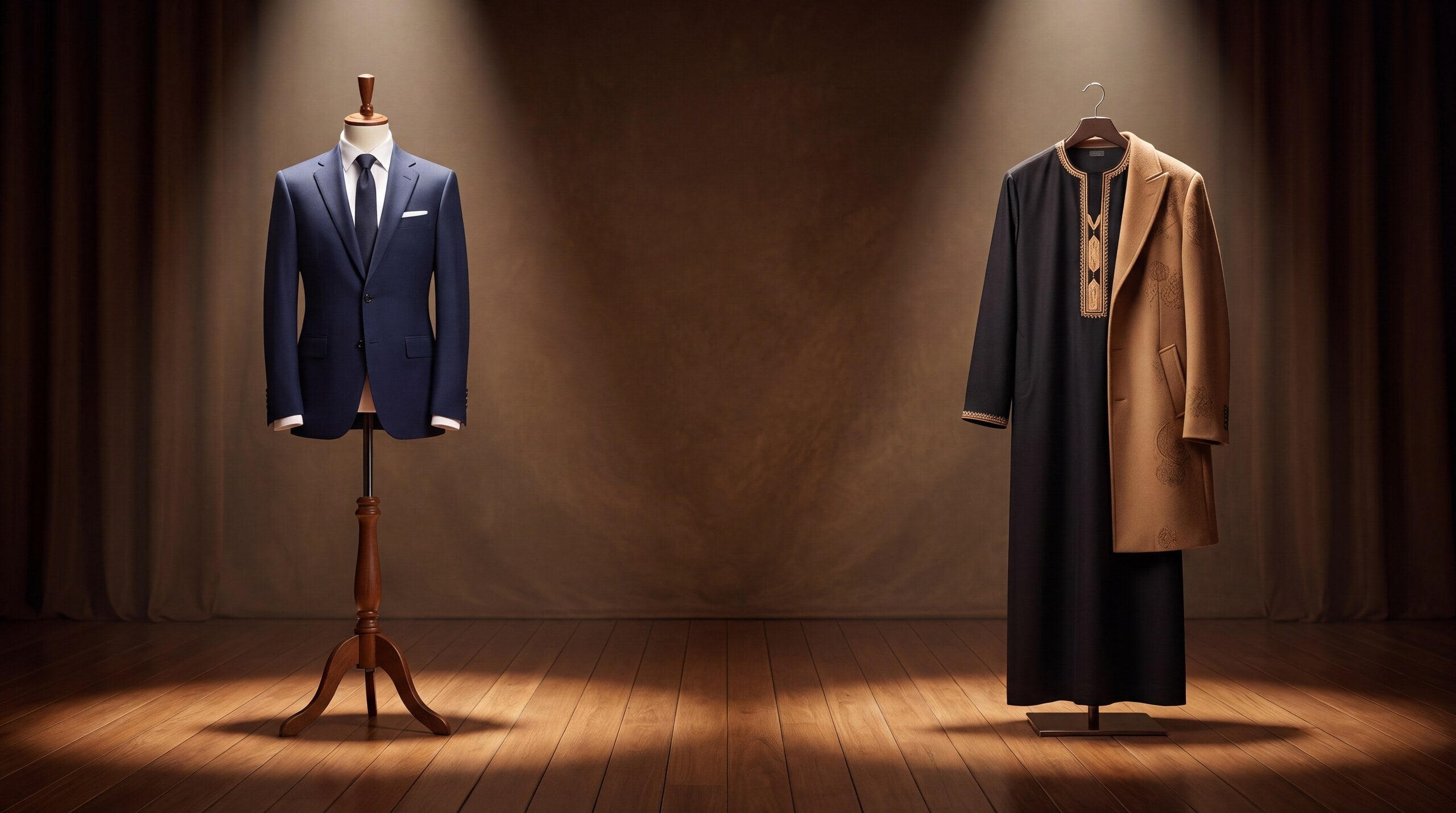
Thobe vs. Suit: What Should Muslim Men Wear to Formal Events?
The invitation says "formal attire." You own both a decent suit and a thobe collection you love. Which do you wear? It’s a question American Muslim men navigate constantly — at weddings, galas, graduations, interfaith dinners — and the answer is more interesting than "it depends." Here’s the honest decision guide, built from what actually happens when you walk into the room each way.
First, Retire a Myth
A premium thobe is formal wear. Across the Gulf, kanduras are worn to state dinners and royal courts; the bisht-draped thobe is literally head-of-state dress. The "formal = Western suit" assumption is a habit, not a rule — and it’s visibly loosening at American events every year, as more brothers show up in a well-cut thobe and get treated like the best-dressed man in the room, not the odd one out.
When the Thobe Wins Outright
Muslim weddings and walimas: the thobe is the home-field uniform — an embroidered thobe belongs here more than any suit (full guide in our nikah dressing article). Eid events and community galas: same logic, turned up a notch. Any event where you’ll pray: the thobe means no awkward suit-trouser sujood, no untucked shirt after standing up from the floor. Interfaith and cultural events: here the thobe isn’t just acceptable — it’s often appreciated as bringing your authentic self, and it starts warmer conversations than a navy suit ever has.
When the Suit Makes Sense
Honest cases exist: a strict corporate dress code you’ve chosen not to renegotiate, a professional context where you’re still establishing yourself and want one variable at a time (see our thobe-at-work guide for the gradual path), or simply an event where you’d spend the night explaining your outfit instead of enjoying it. No judgment — modesty and dignity are the obligations; the garment is the vehicle, not the destination.
Shop This Look


The Power Move: Formal Thobe Done Right
If you choose the thobe for a formal event, commit to formal execution — this is what separates "cultural dress" from "best-dressed man in the room." The formula: a premium fabric thobe in black, deep navy, or maroon with real embroidery detail (the kandura’s clean collar line is also ideal), immaculate ironing, leather dress shoes or pristine leather sandals, a structured kufi, attar, and in cooler months the finishing power of a Turkish coat draped over. This combination photographs at black-tie level — ask anyone who’s seen it enter a graduation hall or a wedding reception.
Shop This Style — Men’s Black Executive Thobe ($49.00)
The Hybrid Options
Some brothers split the difference beautifully: thobe with a tailored blazer over it for the reception line, or suit trousers swapped for the thobe at the prayer-time portion of an event. Wardrobe flexibility is a strength, not a compromise — nobody remembers you changed outfits, they remember you looked sharp in both.
What Actually Signals "Formal" in a Thobe
If you’re new to formal thobe-wearing, the details that separate an everyday piece from an event-ready one are consistent: visible embroidery on the placket or collar (not just a plain weave), a structured mandarin or shirt collar that holds its shape, a heavier drape fabric that doesn’t cling or crease within an hour, and a color with some depth — black, maroon, forest green, deep navy — rather than a pale everyday tone. Buttons matter more than people expect too: metal or fabric-covered buttons read "occasion," plain plastic reads "weekday."
The Bottom Line
Own both capabilities. Wear the suit when strategy calls for it — but never assume the thobe is the lesser formal option, because dressed to its ceiling, it’s usually the greater one. Build your formal-thobe capability from The Topi Wala’s fancy collection and the wedding & Eid embroidered range — and enter the next event as yourself.
