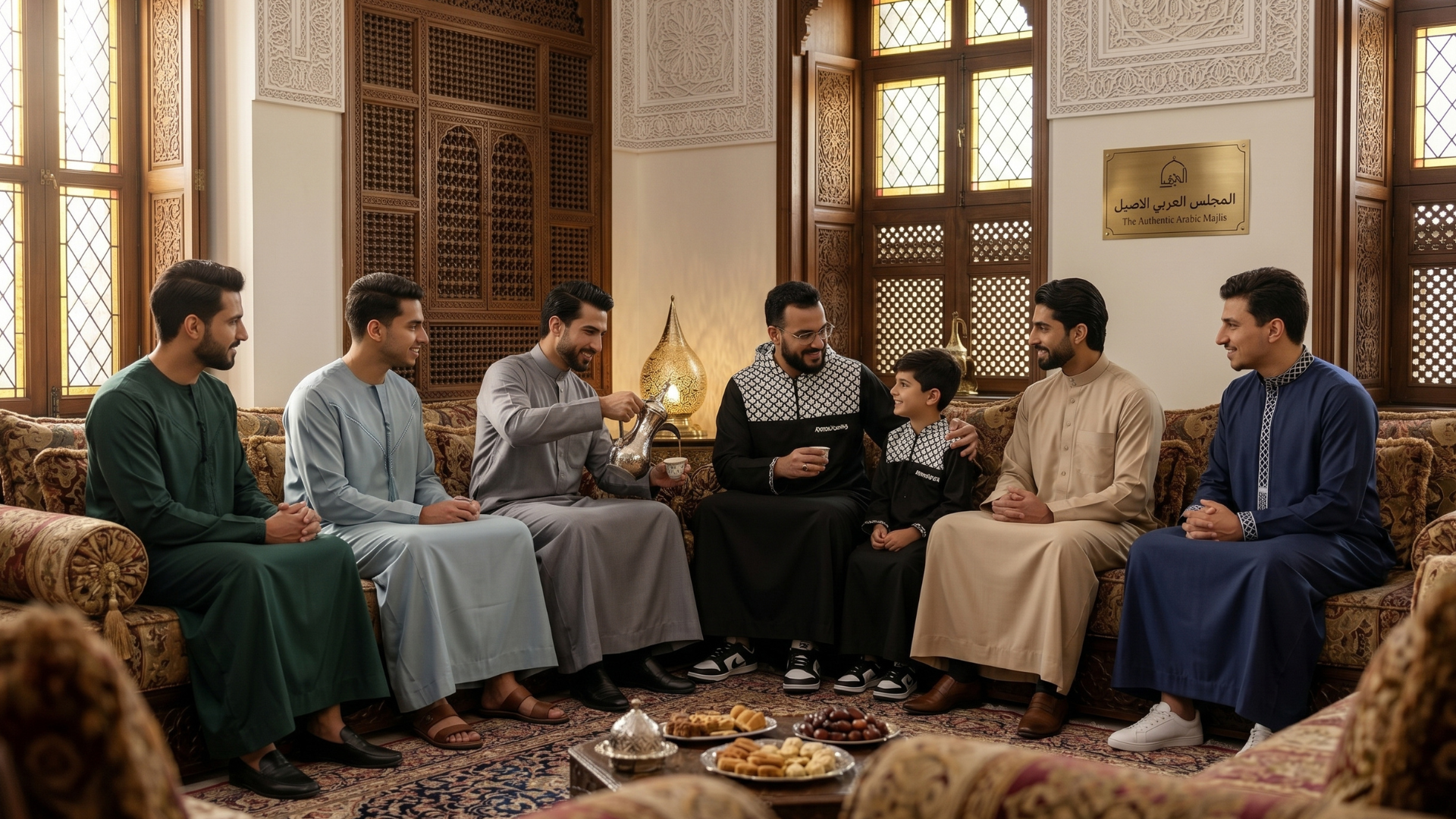
Thobe vs Jubba vs Dishdasha vs Kandura: Key Differences
If you have ever wondered about thobe vs jubba vs dishdasha vs kandura, the short answer is that these are largely four names for the same idea: a long, loose, ankle-length robe worn by men across the Muslim world. The longer answer is more interesting. Each name belongs to a region, and each region has shaped the garment differently — in the collar, the sleeve, the fabric weight, and whether there is a tassel hanging at the neck.
This guide explains what each word means, where it is used, how the cut differs, and how to say it. This is everyday dress for millions of people, and the distinctions matter to the men who wear it.
Thobe vs Jubba vs Dishdasha vs Kandura: The Short Version
| Name | Main regions | Neckline / collar | Sleeves | Typical fabric | Pronunciation |
|---|---|---|---|---|---|
| Thobe (thawb) | Saudi Arabia, Gulf, and as a general term worldwide | Shirt collar or mandarin collar, buttoned placket | Long, often cuffed | Poly-cotton, cotton, winter wool blends | THOHB / THAWB |
| Jubba (jubbah) | South Asia, Turkey, East and West Africa | Usually mandarin or round collar | Long, straight | Cotton, poly-cotton, embroidered fabrics | JUB-bah |
| Dishdasha | Kuwait, Iraq, Qatar, Oman | Varies; Omani version has a neck tassel | Long, sometimes cuffed | Lightweight cotton and blends | dish-DAH-sha |
| Kandura | United Arab Emirates, Oman | Collarless round neckline | Long, wider through the arm | Fine cotton, crisp finish | kan-DOO-ra |
| Gandora (gandoura) | Morocco, Algeria, Tunisia, Libya | Wide open or embroidered neckline | Often short | Light cotton, linen | gan-DOO-ra |
| Qamis (kameez) | South Asia, French-speaking West Africa | Mandarin collar | Long | Cotton, poly-cotton | kah-MEES |
Thobe (Thawb)
"Thobe" comes from the Arabic thawb (ثوب), which simply means "garment" or "cloth." That generic origin is why it has become the default English word for the whole category. When someone in the US says thobe, they usually mean the ankle-length robe regardless of which country's cut it follows.
The classic Saudi thobe is the most recognizable version: a straight, relatively narrow silhouette, a stiffened shirt collar or a mandarin collar, a buttoned placket down the chest, and cuffed sleeves that can take cufflinks. There is usually a chest pocket, and it is worn crisp.
Pronunciation: most English speakers say "THOHB," rhyming with "robe." In Arabic it is closer to "THAWB," with the th of "think."
Winter and Summer Thobes
The same cut is made in different weights. Summer thobes are light poly-cotton that breathe in heat. Winter thobes use heavier brushed or wool-blend fabric, and in colder countries you will see hooded versions that would look out of place in Riyadh but make complete sense in Chicago in January.
Jubba (Jubbah)
Jubba is the term used across South Asia, Turkey and much of Africa, and it is the word many American Muslims of Desi, Turkish or African background grew up with. It comes from the Arabic jubbah.
In practice a jubba is cut a little fuller than a Saudi thobe, often with a mandarin or round collar rather than a shirt collar, and it is more likely to carry embroidery around the neckline and placket. It is the garment you will see at a Jumu'ah in Chicago or a wedding in Karachi, usually with a kufi or topi on the head.
Pronunciation: "JUB-bah," with the u of "book" rather than "cup."
In the US market, "thobe" and "jubba" are used almost interchangeably, and most of what we sell in our men's thobe collection would be recognized under either name.
Shop This Look


Why the Same Word Sounds Different at Home
Ask three generations of the same family what to call this garment and you can get three different answers, and none of them are wrong. Grandparents who immigrated from South Asia usually say jubba, out of habit from home. Parents who grew up partly in the Gulf might default to thobe. Kids who only know the word from an American Islamic school often say whatever their teacher calls the uniform. None of this is a disagreement about the garment — it is a family history compressed into a single word, and it is worth knowing that going in so a naming difference at the dinner table does not turn into a debate about who is "right."
Dishdasha
Dishdasha is the everyday word in Kuwait, Iraq, Qatar and Oman. It refers to the same ankle-length robe, but the details shift by country.
The Kuwaiti and Iraqi dishdasha is close to the Saudi thobe — collared, buttoned, straight-cut — though Kuwaiti versions tend to have a slightly shorter, sharper collar and are worn with a more tailored fit.
The Omani dishdasha is the one that stands out. It has no collar at all. Instead there is a small tassel called a furakha hanging from the neckline, traditionally scented with oud or perfume oil so that a hint of fragrance stays with the wearer through the day. It is one of the most distinctive details in the entire category.
Pronunciation: "dish-DAH-sha," stress on the second syllable.
Kandura
Kandura is the Emirati word, also used in Oman. If you are asking about the difference between thobe and kandura, this is the clearest distinction in the whole guide.
The Emirati kandura has no collar. The neckline is round and finished flat against the throat, sometimes with fine embroidery around it. Instead of a buttoned chest placket, it often has a short slit or a hidden fastening, and many kanduras carry a tarboosha — a decorative cord and tassel hanging from the neckline, similar in spirit to the Omani furakha.
The cut is also fuller. Kanduras are wider through the body and sleeve than a Saudi thobe, which gives them the flowing line associated with Emirati dress. They are traditionally worn brilliantly white, in a crisp fine cotton.
Pronunciation: "kan-DOO-ra."
Emirati vs Saudi Thobe at a Glance
- Collar: Saudi has one (shirt or mandarin). Emirati kandura does not.
- Front: Saudi has a buttoned placket. Kandura usually has none, or a very short one.
- Neck detail: the kandura's tarboosha tassel has no Saudi equivalent.
- Fit: Saudi is straighter and narrower. Kandura is fuller through body and sleeve.
- Pocket: Saudi thobes usually have a chest pocket; kanduras more often use side pockets only.
If the collarless, flowing silhouette is what you are after, our Emirati thobes and kanduras follow that cut.
Fabric Weight Changes the Name Discussion, Not the Category
One thing that trips up first-time buyers: fabric weight and season are sometimes confused with regional style, but they are separate decisions. A Saudi-cut thobe and an Emirati kandura both come in a lightweight summer weave and a heavier winter weave — the collar and neckline define the regional style, while the fabric weight is chosen for climate. If you are shopping in December for a northern-state Jumu'ah, look at fabric weight first and regional cut second; a heavier weave in either silhouette will serve you better than a lightweight one in whichever name sounds most familiar.
Gandora (Gandoura)
The gandora is North African — Moroccan, Algerian, Tunisian and Libyan. It is related to the thobe but genuinely distinct, and deserves its own category rather than being filed as a variant.
A gandora is usually short-sleeved, cut wide and boxy, made in light cotton or linen, and often has no buttons at all — you pull it over your head. The neckline is frequently framed with decorative embroidery or braided trim. It is warm-weather clothing, designed for a Mediterranean and Saharan summer rather than for a formal office.
Do not confuse it with the Moroccan djellaba, which is a related robe with a pointed hood (the qob) and is usually long-sleeved and heavier.
Pronunciation: "gan-DOO-ra."
Our Moroccan thobes and gandoras are the short-sleeve, lightweight side of the range — the ones people reach for in July.
Qamis and Kameez
Qamis is a word that travels. It comes from the Arabic qamīṣ, meaning shirt, and it is the ancestor of the Spanish camisa and the English "chemise."
Two things happen with it:
- In French-speaking West Africa and among French-speaking Muslims in Europe, "qamis" is the standard word for what an English speaker would call a thobe. So qamis vs thobe is largely a question of which language you are speaking, not which garment you are holding.
- In South Asia, the related word kameez means the tunic half of shalwar kameez — a shirt worn over loose trousers, usually finishing somewhere between hip and knee. That is a genuinely different garment from a full-length thobe, because it is worn as part of a two-piece set.
Pronunciation: "kah-MEES."
Burda vs Thobe
A burda is not an alternative to a thobe — it goes on top of one. It is an outer robe or cloak, typically open at the front and worn as a layer over the thobe for formal occasions, Eid, weddings and Jumu'ah. The closely related Gulf bisht or mishlah, the sheer dark cloak with gold trim worn by dignitaries, works the same way.
So the answer to "burda vs thobe" is: you wear both. The thobe is the garment. The burda is the layer that makes it formal.
Thobe vs Jubba vs Dishdasha vs Kandura: Which Should You Buy?
For most buyers in the US, the practical choice is not about the name but about three details: collar, sleeve and weight.
- You want something formal and structured — a collared Saudi-style thobe or a jubba. Works for the office, Jumu'ah, weddings and Eid.
- You want the collarless, flowing look — an Emirati kandura.
- You want something cool and casual for summer — a Moroccan gandora with short sleeves.
- You want an extra layer for formal occasions — add a burda over whichever base garment you choose.
Shop This Style — Men's Charcoal Thobe – Shirt Collar ($49)
Whatever the name, sizing works the same way across the category: it is based on garment length, measured from the shoulder down to the hem. Check the adult thobe size guide before ordering, and if you are between two sizes, take the longer one.
You can see all of these styles side by side in our full thobe collection. Men's thobes start at $49, any three come to $99 automatically at checkout with no code needed, and standard US shipping is free on every order with no minimum — most orders arrive in four to six business days from our Chicago-area warehouse in Glendale Heights, Illinois.

Frequently Asked Questions
Can I mix names when I search or ask a seller?
Yes, and it often gets you better results. Because "thobe," "jubba," "dishdasha" and "kandura" overlap so heavily in everyday use, searching or asking for more than one term at once — for example "collarless thobe" or "kandura-style jubba" — usually surfaces exactly the cut you are picturing faster than sticking to a single word.
Is a thobe the same as a kandura?
They are the same category of garment with different regional cuts. "Thobe" is the general Arabic term and usually implies the collared, buttoned Saudi style. "Kandura" is the Emirati version, which has no collar, a fuller sleeve, and often a decorative tarboosha tassel at the neck.
What is a dishdasha?
A dishdasha is the long robe as it is known in Kuwait, Iraq, Qatar and Oman. The Omani dishdasha is the most distinctive: collarless, with a small scented tassel called a furakha hanging from the neckline.
What is the difference between a thobe and a jubba?
Mostly language and region. "Jubba" is the South Asian, Turkish and African term for the same garment, though jubbas tend to be cut a little fuller, favor a mandarin collar over a shirt collar, and more often carry embroidery. In the US the two words are used interchangeably.
How do you pronounce thobe?
Most English speakers say "THOHB," rhyming with "robe." The Arabic original, thawb, is closer to "THAWB," with the th sound in "think."
Is a gandora the same as a thobe?
No. A gandora is the North African version and is genuinely different in cut: usually short-sleeved, boxier, made in light cotton or linen, and often pulled over the head with no buttons. It is summer clothing rather than formal dress.
What is a burda and do I wear it instead of a thobe?
A burda is an outer cloak worn over a thobe, not instead of it. It adds a formal layer for Eid, weddings and Jumu'ah, in the same way the Gulf bisht or mishlah does.
For more on styles, sizing and care across Islamic menswear, browse The Sunnah Style Journal.