New to Islam? A Practical Guide to Building Your Modest Wardrobe
First of all — congratulations, and welcome to the family. Taking your shahada changes many things, and somewhere down the list (after learning to pray) comes a quieter question: "Do I need to dress differently now?" Here's an honest, pressure-free guide to building a modest wardrobe as a new (or returning) Muslim in America.
First Things First: What's Actually Required
For men, the requirement is modesty: covering from navel to knee, in clothing that isn't see-through or skin-tight, without silk or gold. That's it. Your jeans and t-shirts are almost certainly fine. Nobody should make you feel that changing your wardrobe is a condition of being Muslim — it isn't. Everything past this point is about culture, comfort, and Sunnah — beautiful and recommended, but never obligatory.
So Why Do Muslims Wear Thobes and Kufis?
Because they're beloved traditions, not obligations. The thobe resembles the simple, ankle-length dress described in hadith and keeps you effortlessly modest without a belt, tucked shirt, or second thought. The kufi marks the head covering worn for prayer across the Muslim world for centuries, from West Africa to South Asia to the Gulf. Many converts find that wearing them — even occasionally — builds a sense of belonging at the masjid and a visible connection to the wider ummah. It's less about "looking Muslim" and more about feeling settled in your new identity.
Building Confidence at the Masjid
Your first few Jumu'ahs can feel like a lot — new language, new movements, new faces. Clothing is actually one of the easiest parts to get right, and getting it right takes a small weight off your shoulders. Showing up in a clean thobe and kufi signals nothing more than "I came prepared and I care," and brothers will notice and welcome you for it. It also solves a very practical problem: no belt to loosen for sujood, no shirt riding up, no worrying if your undershirt is showing when you bow.
Your Starter Kit
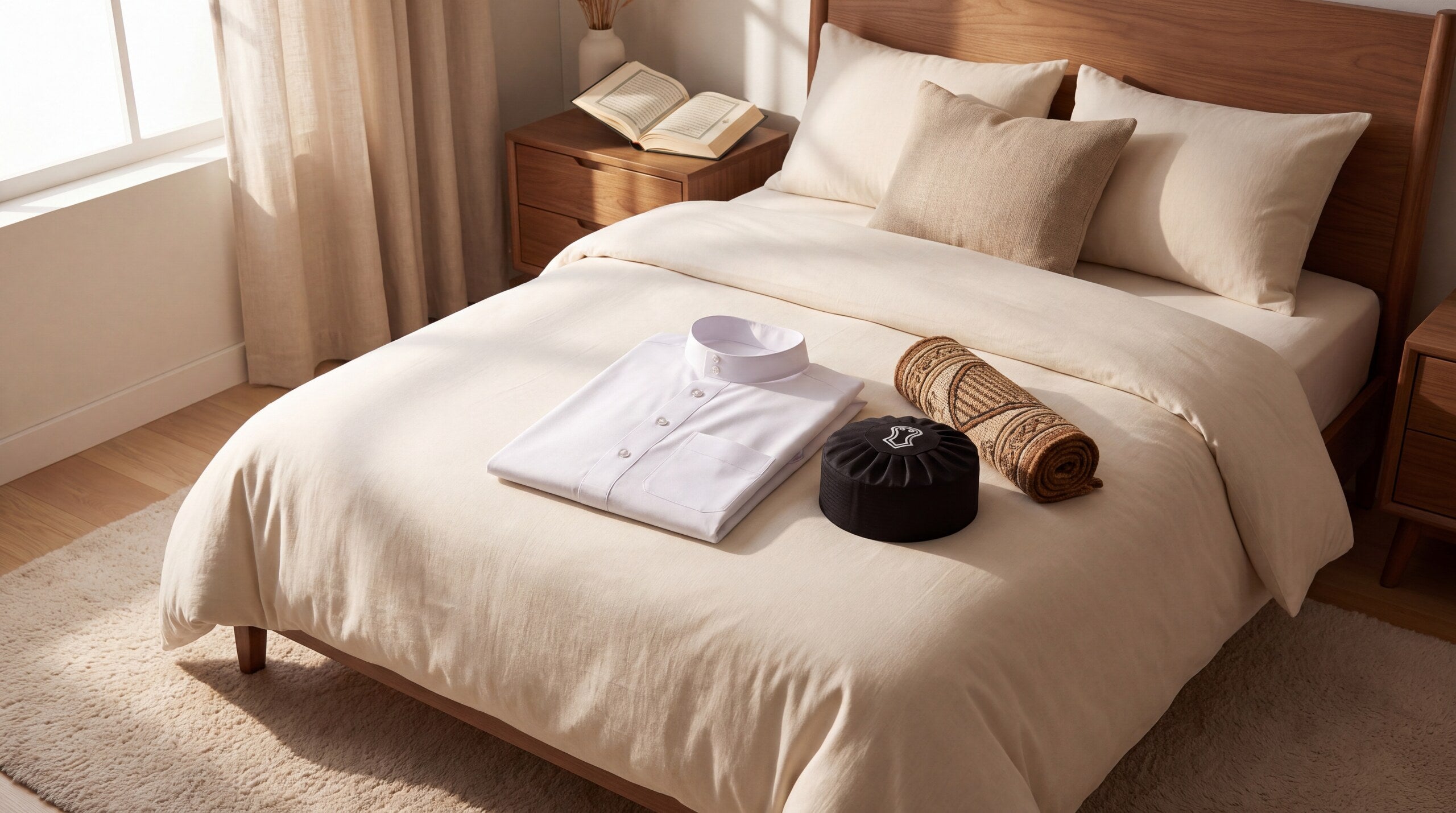
If you want to begin, start small. One plain thobe in white, navy, or cream (around $49) for Jumu'ah and masjid visits, and a kufi (from $17) for prayer. Add comfortable slip-on sandals — you'll be removing shoes at the masjid constantly — and a small prayer mat for the car or office, and you're fully equipped for well under $100.
Shop This Look


Caring for Your First Thobe
Keep it simple: wash cold or warm (never hot, it shrinks the fabric), skip the dryer's high heat if you can, and hang it up rather than folding it in a drawer so it's wrinkle-free for the next prayer. A quick low-heat iron over the collar and cuffs before Jumu'ah takes two minutes and makes a real difference in how put-together you look and feel.
Wear It at Your Own Pace
Plenty of brothers wear the thobe only on Fridays at first. That's a beautiful place to start — Jumu'ah is exactly when dressing up is Sunnah. As it starts to feel like yours, you might reach for it more often: around the house, for Eid, for community events. There's no timeline and no test. Some brothers never wear one outside the masjid, and that's completely fine too.
Common Questions New Muslims Ask
- Do I have to wear a thobe to be a good Muslim? No. It's cultural dress, not a pillar of faith.
- Can I wear it to work or school? Many brothers do on Fridays if their workplace is casual — otherwise, save it for after work and masjid visits.
- What if I don't like how it looks on me at first? Totally normal. Fit and fabric weight make a huge difference — try a different length or a darker color before giving up on the style.
A Few Tips from Those Who've Been There
Get your size right the first time — thobe sizing goes by height and chest, and a fit guide beats guessing. White shows everything, so a navy, cream, or grey thobe is the practical first pick if you're worried about staining early on. And when Eid comes around, treat yourself to something with embroidery — your first Eid deserves it.
Shop This Style — White Thobe, Mandarin Collar ($49.00)

You Belong Here
Clothing is the smallest part of your new journey, but there's something powerful about looking in the mirror before Jumu'ah and seeing a Muslim looking back. Whenever you're ready, we're here — The Topi Wala was built for exactly this moment, browse the full collection, and may Allah bless every step of your path.