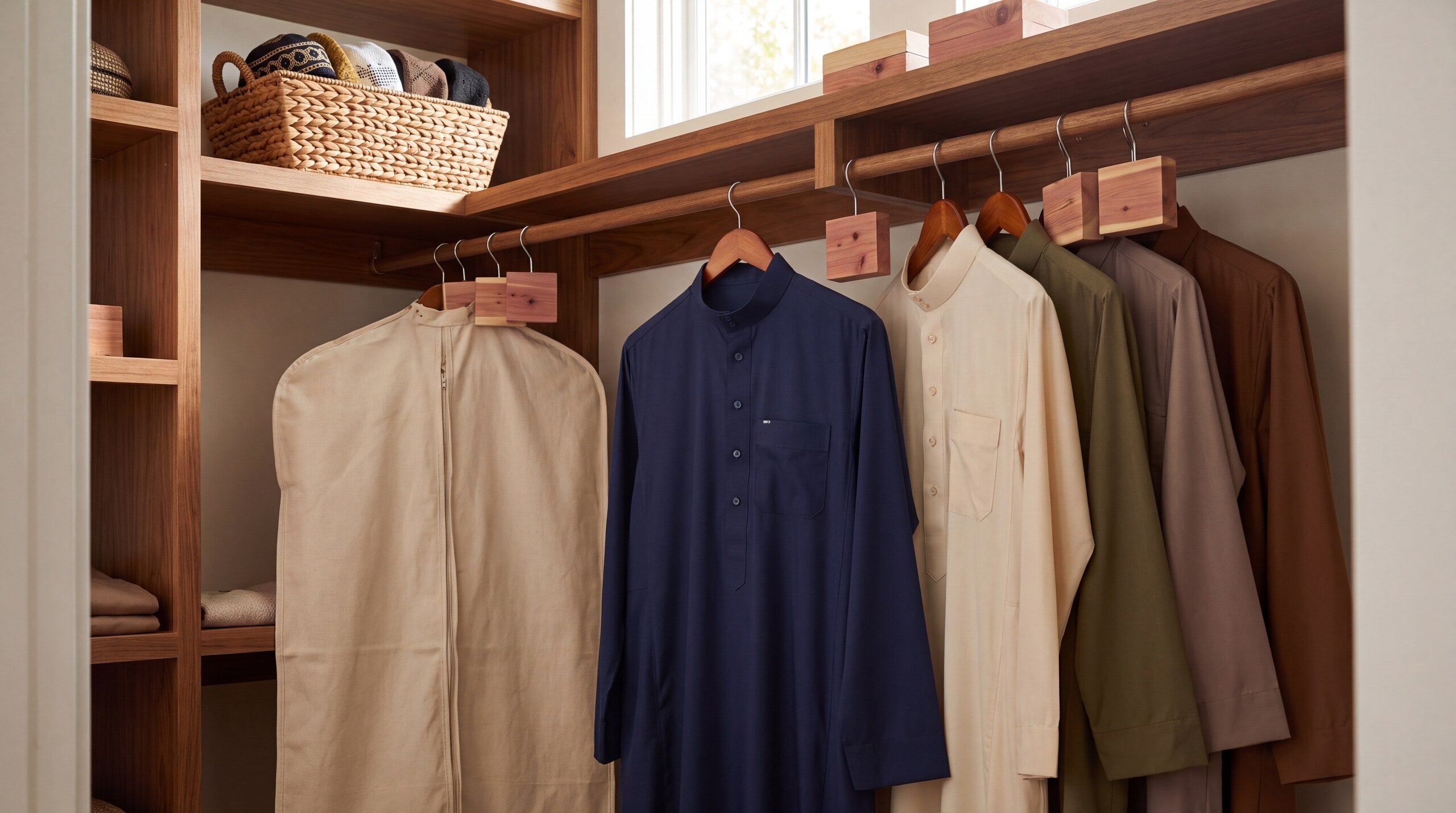
How to Store, Hang & Organize Your Thobes: The Closet Guide
You invested in good thobes; the closet is where that investment either lasts five years or dies in eighteen months. Storage is the unglamorous half of garment care — and the half almost nobody does right. Here’s the complete system.
Rule One: Hang, Don’t Fold
Thobes live on hangers, full stop. Folding sets creases along the fold lines that need re-ironing every wear, and stacked piles crush the bottom thobes into permanent wrinkles. The exceptions: knit or very soft fabrics that might shoulder-stretch on thin hangers (fold these over a hanger bar instead), and travel — where the rolling method takes over.
Use the Right Hangers
Wire hangers are thobe assassins — they poke shoulder bumps into the fabric and rust onto whites. Use wide-shoulder plastic or wooden hangers; the Turkish coat especially earns a sturdy wooden one. Give each thobe an inch of breathing room — crushed-together garments wrinkle each other and trap moisture.
A Note on Hanger Material
Plastic tubular hangers are the budget-friendly default and work fine for most thobes. Wooden hangers cost more but resist warping under heavier fabrics (embroidered thobes, winter weights, coats) and simply look better if your closet is open-front. Padded velvet hangers are worth it only for your most delicate pieces — they grip fabric well enough to keep a slippery lining from sliding off, but they take up more rail space, so use them sparingly rather than throughout.
Organize by Frequency, Not Color
The functional closet order: everyday thobes at arm’s reach in the center, the Jumu’ah/occasion pieces (your kandura and embroidered thobe) together at one end, and off-season pieces at the far end or stored away. You’ll never iron in a panic at 12:45 on a Friday again.
Shop This Look


Seasonal Rotation
Twice a year, swap the active lineup: gandoras forward in May, winter weights forward in October. Off-season pieces go into breathable garment bags or a cotton-sheet-covered section — never sealed plastic, which traps humidity and yellows whites. Wash everything before storing; invisible sweat and food traces oxidize into stains over months and invite moths.
Humidity Is the Silent Enemy
Even a well-ventilated closet can trap enough humidity in basements, garages, or coastal climates to encourage mildew smell on stored thobes, especially cotton and linen blends. A small silica gel canister or a closet dehumidifier bag solves this cheaply. If a stored piece ever comes out smelling musty despite being clean when packed away, air it outside on a hanger for a few hours before assuming it needs a full rewash.
Protecting the Whites
White thobes yellow from light exposure, plastic contact, and stored-in body oils. Keep them washed-then-stored, in cloth cover, away from direct sunlight. Cedar blocks or lavender sachets handle moths without the mothball smell announcing you at the masjid.
Kufis Get a Home Too
A small basket or drawer section keeps kufis from migrating around the house. Structured kufis stack inside each other dome-up; knits fold flat. (The car kufi and masjid-bag kufi are separate deployments, obviously.)
The Five-Minute Weekly Reset
Once the system is set up, maintaining it takes almost no time: hang anything you wore back in its zone rather than draping it over a chair, spot-check for anything that needs a wash before it goes back on the hanger, and do a quick scan every Thursday night so Jumu’ah morning starts with a closet that’s already sorted. Small, consistent habits beat an occasional deep reorganization.

The Small-Closet Playbook
Limited space? A slim rolling rack handles the thobe collection beautifully — they’re light garments. Or use cascading hangers to go vertical. Even six thobes and a coat need barely two feet of rail.
Five Minutes, Years of Payoff
Good storage means every thobe comes off the hanger ready to wear — which means you actually wear your best pieces more. Set the system up once, then browse The Topi Wala’s collection knowing every new piece will last its full lifespan.